


In today’s competitive digital landscape, businesses need a reliable way to reach potential customers quickly. While search engine optimization (SEO) builds long-term visibility, Pay-Per-Click Advertising (PPC) offers immediate exposure on search engines and other online platforms.
Whether you run a local business, an eCommerce store, or a service-based company, PPC can help you attract highly targeted visitors and generate measurable results.
In this guide, we’ll explain what PPC is, how it works, and why it remains one of the most effective digital marketing strategies in 2026.
What Is Pay-Per-Click Advertising (PPC)
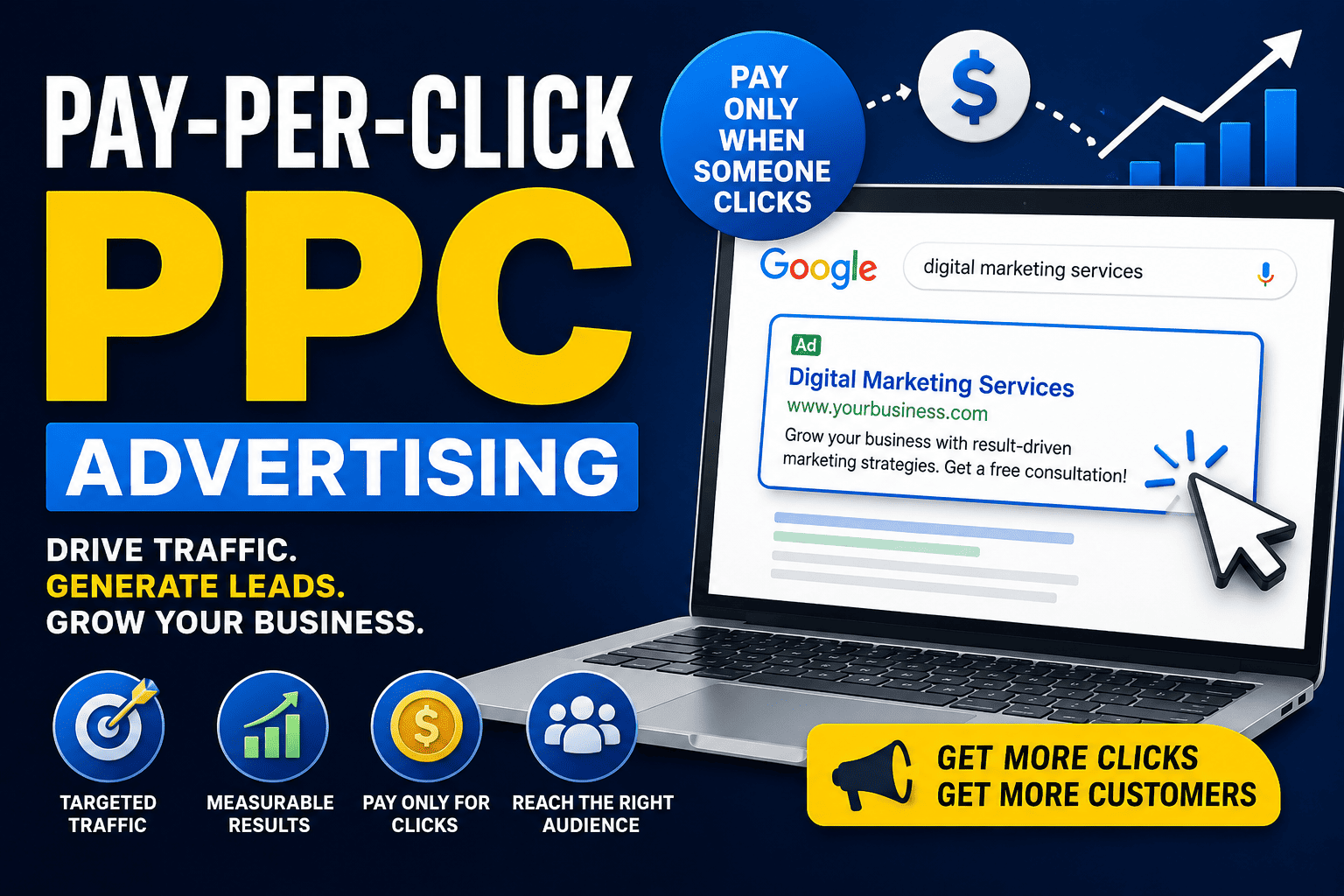
Pay-Per-Click Advertising, commonly known as PPC, is an online advertising model where advertisers pay only when someone clicks on their ad.
Instead of waiting months for organic rankings, PPC allows your website to appear at the top of search engine results almost instantly.
The most popular PPC platform is Google Ads, but businesses also use platforms like Microsoft Advertising, Meta Ads, and LinkedIn.
How Does PPC Work?
PPC works through an auction-based system.
When a user searches for a keyword such as “best digital marketing agency in Delhi” or “buy running shoes online,” advertisers bid on those keywords. Search engines then determine which ads appear based on several factors:
- Bid amount
- Ad quality
- Relevance of the landing page
- Expected click-through rate
If someone clicks on your ad, you pay the amount determined by the auction.
Why PPC Is Important for Businesses
PPC is one of the fastest ways to generate targeted traffic.
Instant Visibility
Your ads can appear at the top of search results as soon as the campaign goes live.
Highly Targeted Audience
You can target users by:
- Keywords
- Location
- Age
- Interests
- Device type
- Time of day
Full Budget Control
Set daily and monthly budgets and adjust them at any time.
Measurable Results
Track clicks, conversions, leads, and return on investment (ROI).
Fast Lead Generation
PPC is ideal for businesses that want immediate inquiries and sales.
Types of PPC Advertising
Search Ads
Text ads shown on search engines when users enter relevant keywords.
Display Ads
Banner ads shown across websites in ad networks.
Shopping Ads
Product listings that include images, prices, and store information.
Video Ads
Ads displayed on platforms like YouTube.
Remarketing Ads
Ads shown to users who have previously visited your website.
Key PPC Terms You Should Know
CPC (Cost Per Click)
The amount paid for each click.
CTR (Click-Through Rate)
The percentage of people who click after seeing your ad.
Quality Score
A rating used by Google to measure ad relevance and landing page quality.
Conversion Rate
The percentage of visitors who complete a desired action.
ROAS (Return on Ad Spend)
Revenue generated compared to ad cost.
Benefits of PPC Advertising
PPC offers several advantages for businesses of all sizes.
- Immediate website traffic
- High-intent visitors
- Flexible budgeting
- Real-time optimization
- Accurate performance tracking
- Increased sales and leads
PPC vs SEO: What’s the Difference?
Feature |
PPC |
SEO |
| Result Speed | Immediate | Long-term |
| Cost | Pay per click | No direct cost per click |
| Visibility | Sponsored placements | Organic rankings |
| Sustainability | Stops when budget ends | Continues with strong rankings |
| Best For | Quick leads and testing | Long-term growth |
The most effective strategy often combines both PPC and SEO.
How to Create a Successful PPC Campaign
Define Your Goal
Decide whether you want leads, sales, phone calls, or website traffic.
Conduct Keyword Research
Target relevant keywords with strong commercial intent.
Write Compelling Ad Copy
Use clear headlines and strong calls to action.
Optimize Landing Pages
Ensure the landing page matches the ad and encourages conversions.
Set Conversion Tracking
Track form submissions, calls, and purchases.
Monitor and Optimize
Review search terms, bids, and ad performance regularly.
Common PPC Mistakes to Avoid
- Targeting broad keywords
- Ignoring negative keywords
- Sending traffic to poor landing pages
- Not tracking conversions
- Using weak ad copy
- Failing to test ads
Who Should Use PPC Advertising?
PPC is effective for:
- Local businesses
- Real estate companies
- e-commerce stores
- Healthcare providers
- Educational institutions
- Service providers
- Start-ups
For example, a real estate developer in Delhi NCR can run location-based PPC campaigns to generate qualified leads from specific areas.
How Much Does PPC Cost?
PPC costs vary depending on industry, competition, and keyword demand.
Some local keywords may cost a few rupees per click, while highly competitive industries like legal services, finance, and real estate can have much higher costs.
The key is not the cost per click alone, but the return you generate from each conversion.
PPC Trends in 2026
Modern PPC campaigns focus on:
- First-party audience data
- Conversion-focused landing pages
- Smart bidding strategies
- Video advertising
- Remarketing
- Cross-platform campaigns
Businesses that continuously test and refine campaigns tend to achieve the best results.
Is PPC Worth It?
Yes, PPC is worth it when campaigns are planned and managed correctly.
It allows businesses to:
- Reach customers at the exact moment they are searching
- Generate fast leads and sales
- Measure every rupee spent
- Scale profitable campaigns
For companies seeking immediate results, PPC remains one of the most effective online advertising channels.
Final Thoughts
Pay-Per-Click Advertising (PPC) is a powerful strategy for businesses that want fast, targeted, and measurable results.
Unlike many marketing methods, PPC puts your offer in front of potential customers precisely when they are ready to take action.
When combined with thoughtful keyword targeting, compelling ad copy, and optimized landing pages, PPC can become a consistent source of high-quality leads and revenue.
If your goal is to grow your business quickly and efficiently, PPC deserves a place in your digital marketing strategy.