



Introduction
Launching a marketing campaign takes time, effort, and budget. Whether you’re running ads, sending emails, posting on social media, or creating content, the goal is always the same: generate leads, increase sales, and grow your business.
But what happens when the results don’t match your expectations?
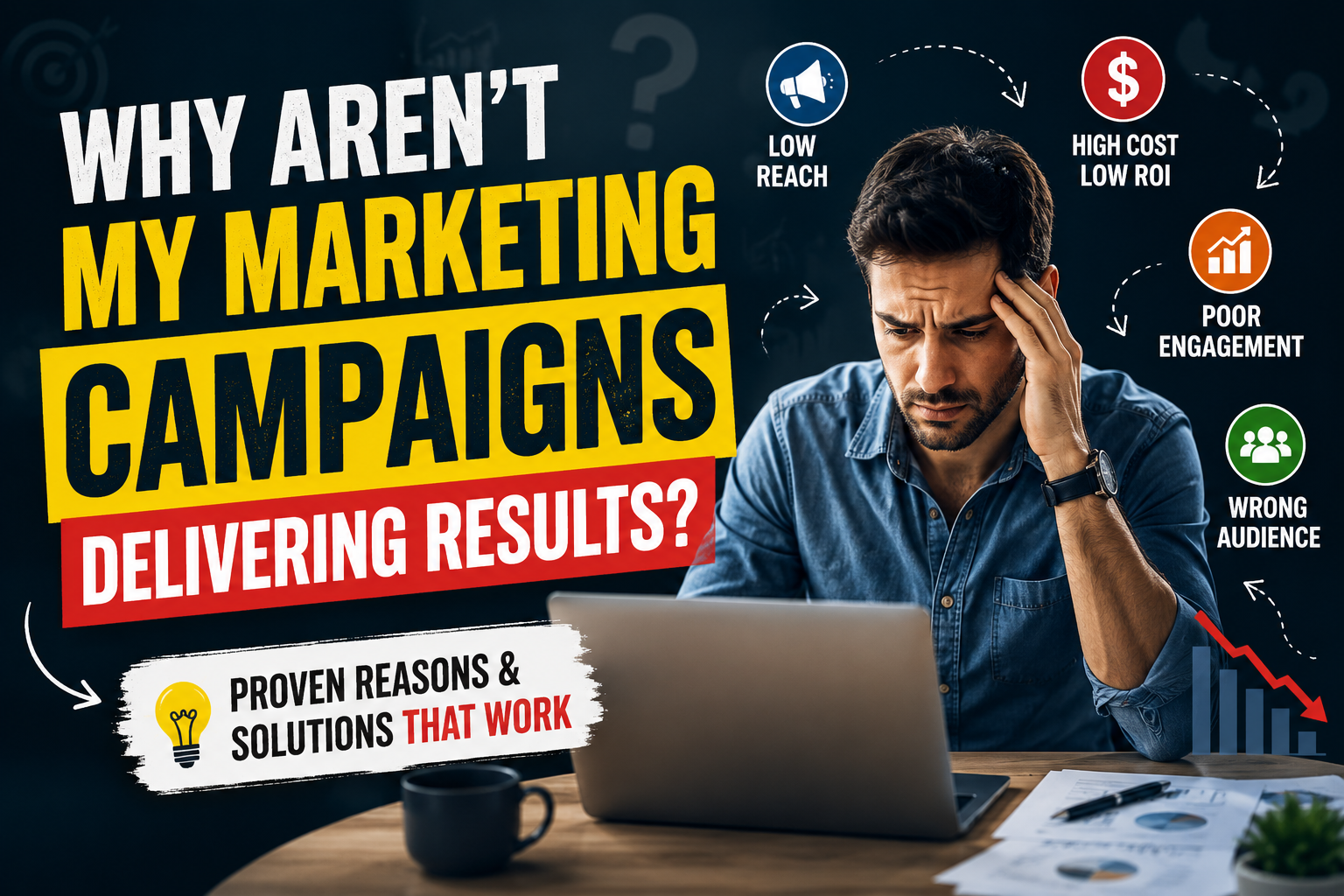
If your marketing campaigns aren’t delivering the outcomes you hoped for, don’t assume marketing doesn’t work. In most cases, the problem isn’t the campaign itself—it’s one or more hidden issues that prevent it from performing well.
In this guide, we’ll explore the most common reasons marketing campaigns fail and, more importantly, how you can fix them to improve your return on investment.
1. You Don’t Have Clear Marketing Goals
Every successful campaign starts with a clear objective.
Many businesses launch campaigns simply because they want “more customers.” While that sounds reasonable, it’s too broad to measure success.
Instead, define specific goals such as:
• Generate 100 qualified leads in 30 days
• Increase website traffic by 40%
• Boost online sales by 20%
• Improve email sign-ups
When goals are measurable, it becomes much easier to evaluate performance and make improvements.
2. You’re Targeting the Wrong Audience
One of the biggest reasons campaigns fail is poor audience targeting.
Your message may be excellent, but if it’s shown to people who don’t need your product or service, you won’t get meaningful results.
Take time to understand your ideal customer:
• Age
• Location
• Interests
• Buying behavior
• Pain points
• Budget
• Preferred platforms
The better you understand your audience, the easier it becomes to create campaigns that connect with them.
3. Your Message Isn’t Solving a Real Problem
People don’t buy products.
They buy solutions.
If your campaign focuses only on features instead of customer problems, potential buyers may ignore it.
Instead of saying:
“Our software has 25 advanced features.”
Say:
“Save hours every week by automating repetitive tasks.”
Always explain how your product improves your customer’s life or business.
4. Your Landing Page Doesn’t Match Your Campaign
Many businesses spend money driving traffic to a website but lose visitors because the landing page creates a poor experience.
Common problems include:
• Slow loading speed
• Confusing layout
• Too much text
• Weak headlines
• No clear call-to-action
• Difficult forms
Your landing page should continue the same message visitors saw in your advertisement or email.
Consistency builds trust and improves conversions.
5. You’re Ignoring Data
Marketing without tracking performance is like driving with your eyes closed.
Review your campaign data regularly.
Pay attention to:
• Click-through rate (CTR)
• Conversion rate
• Cost per lead
• Bounce rate
• Average session duration
• Return on ad spend (ROAS)
These metrics help identify what’s working and what needs improvement.
6. Your Budget Isn’t Being Used Effectively
A bigger budget doesn’t automatically produce better results.
Sometimes small, well-optimized campaigns outperform expensive ones.
Instead of increasing your spending immediately:
• Test different audiences
• Compare multiple ad creatives
• Improve landing pages
• Optimize bidding strategies Spend smarter before spending more.
7. You’re Not Testing Different Campaign Variations
No campaign is perfect on the first attempt. Successful marketers constantly test:
• Headlines
• Images
• Videos
• Calls-to-action
• Audience segments
• Ad copy
• Landing pages
Small improvements can lead to significant increases in conversions over time.
8. Your Offer Isn’t Attractive Enough
Even a perfectly targeted campaign will struggle if the offer isn’t compelling.
Ask yourself:
• Why should someone choose your business?
• What makes your offer different?
• Are you providing enough value?
Consider adding:
• Limited-time discounts
• Free consultations
• Bonus resources
• Money-back guarantees
• Free shipping
A stronger offer often leads to better campaign performance.
9. You’re Expecting Results Too Quickly
Marketing requires consistency.
Many businesses stop campaigns after just a few days because they don’t see immediate results.
In reality, campaigns often need time to gather data, identify winning strategies, and build customer trust.
Instead of making daily changes, allow campaigns enough time before evaluating performance.
Patience combined with regular optimization usually produces better long-term results.
10. You’re Not Building Trust
People buy from businesses they trust.
Your campaigns should include trust signals such as:
• Customer reviews
• Testimonials
• Case studies
• Certifications
• Industry experience
• Clear contact information
Trust reduces hesitation and increases the likelihood of conversions.
Best Practices for Better Marketing Campaign Results
If you want consistent improvements, follow these proven practices:
• Define measurable goals before launching campaigns.
• Understand your target audience thoroughly.
• Focus on solving customer problems.
• Create clear and compelling offers.
• Keep landing pages simple and fast.
• Monitor campaign performance regularly.
• Test different creative ideas.
• Optimize based on real data.
• Stay consistent and patient.
Small improvements across multiple areas often produce the biggest results.
Final Thoughts
If your marketing campaigns aren’t delivering results, don’t assume your marketing strategy has failed. In most cases, success comes from identifying weak points, making informed adjustments, and continuously improving your approach. Focus on understanding your audience, communicating clear value, optimizing every stage of the customer journey, and measuring performance consistently. Marketing is not about finding a single perfect campaign. It’s about building a process that becomes stronger with every improvement. When you apply these principles consistently, you’ll create campaigns that generate better leads, higher conversions, and stronger business growth over time.