


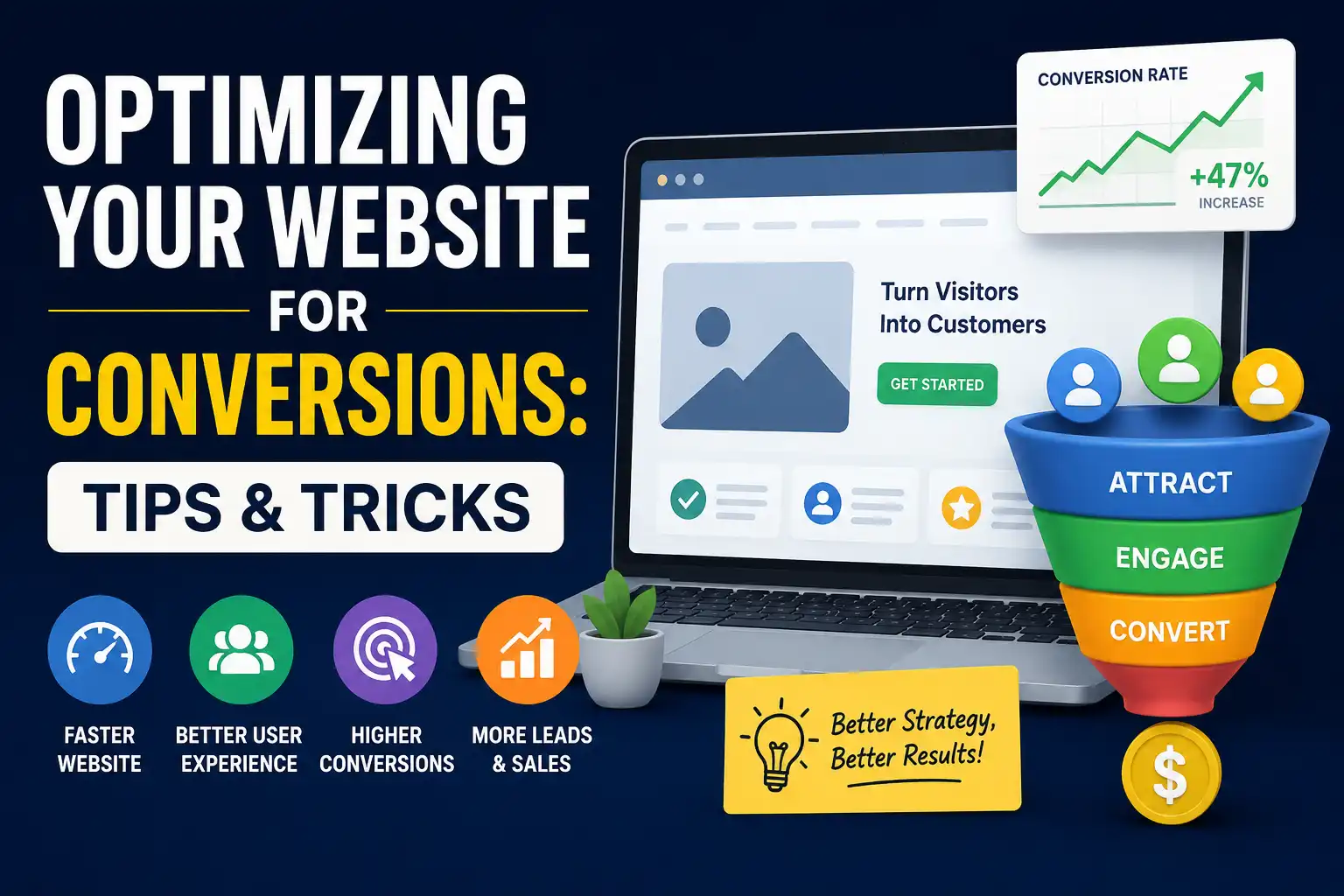
Your website may be getting traffic every day, but traffic alone does not grow a business. What truly matters is how many visitors take action whether it’s making a purchase, filling out a contact form, booking a consultation, or subscribing to your newsletter. That’s where website conversion optimization becomes important.
A well-optimized website not only attracts visitors but also turns them into paying customers. Even small improvements in design, speed, user experience, or content can significantly increase conversions and revenue.
If you are running a business online, working with a professional website development agency in Delhi can also help improve your website structure, user experience, and overall conversion performance.
In this guide, we’ll cover practical and easy-to-implement website conversion tips that can help improve user engagement, reduce bounce rates, and increase sales.
What Is Website Conversion Optimization?
Website conversion optimization is the process of improving your website so visitors are more likely to complete a desired action.
These actions may include:
- Purchasing a product
- Submitting a form
- Calling your business
- Downloading a resource
- Booking an appointment
- Signing up for a newsletter
The main goal is simple: get more results from your existing website traffic.
For example, if 1,000 people visit your website and only 10 people buy something, your conversion rate is 1%. By optimizing your website, you can improve that percentage without spending more money on ads or traffic.
Why Conversion Optimization Matters
Many businesses focus only on getting traffic from SEO or paid ads. But if the website experience is poor, visitors leave without taking action.
A conversion-focused website helps you:
- Increase sales and leads
- Improve customer trust
- Reduce bounce rates
- Maximize marketing ROI
- Create a better user experience
- Grow revenue without increasing ad spend
A well-optimized website becomes a powerful business asset instead of just an online brochure.
1. Improve Website Loading Speed
Website speed directly affects conversions. People expect websites to load quickly, especially on mobile devices. If your website takes too long to open, visitors often leave before even viewing your content.
Ways to improve speed:
- Compress images before uploading
- Use fast web hosting
- Enable browser caching
- Minimize unnecessary plugins
- Use a CDN (Content Delivery Network)
- Optimize CSS and JavaScript files
A faster website creates a smoother experience and encourages users to stay longer.
Internal Linking Opportunity:
- Website speed optimization
- Core Web Vitals optimization
- Technical SEO services
- Website development agency in Delhi
2. Make Navigation Simple and Clear
Visitors should find information quickly without confusion. Complicated menus and cluttered layouts frustrate users and reduce conversions.
Best practices for navigation:
- Keep menu options minimal
- Use clear category names
- Add a visible search bar
- Maintain consistent design across pages
- Use proper headings and sections
Simple navigation improves user experience and helps visitors move smoothly through the customer journey.
Businesses often hire a trusted website development agency in Delhi to create user-friendly website structures that improve engagement and conversions.
3. Create Strong and Clear Call-to-Actions (CTAs)
Your CTA tells users what action to take next. Weak or confusing CTAs often lead to missed opportunities.
Effective CTA examples:
- Get a Free Quote
- Start Your Free Trial
- Book a Consultation
- Download Now
- Contact Our Team
Tips for better CTAs:
- Use action-oriented words
- Make buttons visually noticeable
- Place CTAs strategically throughout the page
- Keep CTA text short and direct
A strong CTA can dramatically increase leads and conversions.
4. Optimize Your Website for Mobile Users
A large percentage of users browse websites on smartphones. If your website does not work properly on mobile devices, you are likely losing valuable customers.
Mobile optimization tips:
- Use responsive design
- Ensure buttons are easy to tap
- Improve mobile page speed
- Use readable font sizes
- Avoid popups that block content
Google also prioritizes mobile-friendly websites in search rankings, making mobile optimization important for both SEO and conversions.
5. Build Trust With Social Proof
People trust businesses that other customers recommend. Adding trust signals to your website can help visitors feel more confident before making a decision.
Examples of social proof:
- Customer reviews
- Testimonials
- Case studies
- Google ratings
- Client logos
- Success stories
When visitors see positive experiences from real customers, they are more likely to convert.
Internal Linking Opportunity:
- Customer success stories
- Case study pages
- Review management services
6. Improve Website Content Readability
Good website content should be easy to understand. Visitors usually scan pages quickly instead of reading every word.
How to improve readability:
- Use short paragraphs
- Add headings and subheadings
- Include bullet points
- Avoid overly technical language
- Write conversationally
Readable content keeps visitors engaged and encourages them to continue exploring your website.
7. Use High-Quality Images and Visuals
Visual content plays a major role in user engagement. Poor-quality images can make a business appear unprofessional.
Use visuals strategically:
- Add real product photos
- Include team images
- Use infographics where helpful
- Showcase before-and-after examples
- Optimize images for fast loading
Relevant visuals help users connect emotionally with your brand.
8. Reduce Form Friction
Long or complicated forms often reduce conversions. Most users prefer quick and easy interactions.
Tips for better forms:
- Ask only essential information
- Use clear labels
- Enable autofill options
- Add trust signals near forms
- Use simple layouts
Shorter forms usually improve submission rates.
9. Focus on User Experience (UX)
User experience is one of the biggest factors affecting conversion rates. A clean and professional design helps visitors trust your business.
Key UX improvements:
- Maintain consistent branding
- Avoid cluttered layouts
- Use white space properly
- Highlight important information
- Make pages visually balanced
A good user experience encourages visitors to stay longer and interact with your content.
For businesses wanting a modern and conversion-focused website, partnering with a reliable website development agency in Delhi can help create a better digital experience.
10. Add Live Chat or Quick Support Options
Visitors often have questions before making a purchase or inquiry. Quick support can remove hesitation and increase conversions.
Useful support options:
- Live chat
- WhatsApp integration
- Chatbots
- Click-to-call buttons
- FAQ sections
Fast communication improves customer confidence and reduces drop-offs.
11. Optimize Landing Pages
Landing pages should focus on one goal only. Too many distractions can reduce conversion rates.
High-converting landing page elements:
- Clear headline
- Strong value proposition
- Engaging visuals
- Testimonials
- Single CTA focus
- Minimal distractions
Dedicated landing pages usually perform better than general website pages.
12. Track and Analyze User Behavior
Optimization is an ongoing process. You need data to understand what is working and what needs improvement.
Important metrics to monitor:
- Bounce rate
- Conversion rate
- Average session duration
- Click-through rates
- Exit pages
- Form submissions
Tools like Google Analytics and heatmaps can help identify user behavior patterns and conversion issues.
Common Website Conversion Mistakes to Avoid
Many businesses unknowingly hurt conversions by making simple mistakes.
Avoid these issues:
- Slow-loading pages
- Too many popups
- Weak CTAs
- Poor mobile experience
- Confusing navigation
- Low-quality content
- Lack of trust signals
- Overcrowded layouts
Fixing these problems can improve website performance quickly.
Final Thoughts
Website conversion optimization is not just about design or traffic — it’s about creating a smooth experience that encourages visitors to take action.
Small improvements in speed, content, navigation, trust-building, and mobile usability can make a significant difference in your business growth.
Instead of focusing only on getting more traffic, focus on making your existing traffic convert better. A well-optimized website helps you generate more leads, improve customer experience, and increase revenue over time.
If you regularly analyze user behavior and continue improving your website, you’ll stay ahead of competitors and build a stronger online presence. Working with an experienced website development agency in Delhi can also help businesses build high-performing websites designed for better conversions and long-term growth.
FAQs
How can I improve my website conversion rate?
You can improve conversion rates by optimizing website speed, improving CTAs, simplifying navigation, enhancing mobile usability, and building trust through reviews and testimonials.
Why is website speed important for conversions?
Slow websites frustrate visitors and increase bounce rates. Faster websites provide a better experience and improve user engagement.
What is a good website conversion rate?
Conversion rates vary by industry, but many businesses aim for a conversion rate between 2% and 5%.
Does mobile optimization affect conversions?
Yes. A mobile-friendly website improves user experience and helps retain visitors from smartphones and tablets.
What are the best tools for tracking conversions?
Popular tools include Google Analytics, Google Search Console, Hotjar, and Microsoft Clarity.