


Search engine optimization keeps changing every year, but one thing always stays the same — websites that provide useful information and a better user experience continue to rank higher. In 2026, simply adding keywords inside content is no longer enough. Search engines now focus more on content quality, page experience, trust signals, and how useful your website is for real users.
Many businesses still struggle to rank because they focus only on publishing blogs without improving the actual structure of their pages. A well-optimized page helps search engines understand your content clearly while also improving engagement, conversions, and website authority.
In this guide, we will cover the most effective on-page SEO techniques that are delivering real results in 2026 and how businesses can use them to improve rankings, traffic, and leads.
What is On-Page SEO?
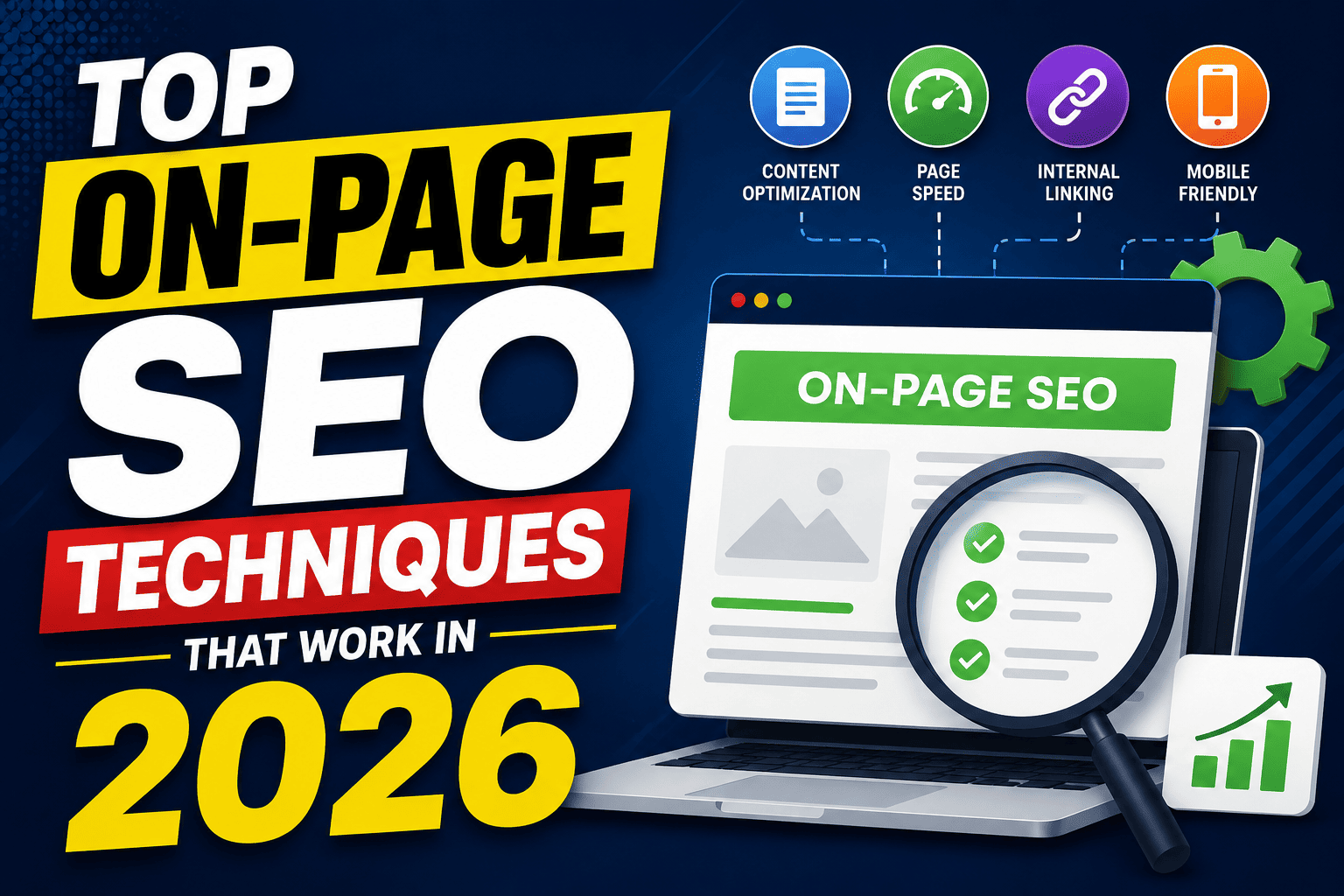
On-page SEO refers to all the improvements made directly on a website page to help it rank better in search results. This includes:
- Content optimization
- Proper heading structure
- Internal linking
- Page speed improvements
- Keyword placement
- User experience
- Mobile optimization
- Image optimization
- Meta tags
- Content readability
Strong on-page SEO helps search engines understand your website while making the page more valuable for visitors.
Focus on Search Intent Instead of Just Keywords
One of the biggest ranking factors in 2026 is understanding what users actually want.
Many websites still make the mistake of stuffing keywords unnaturally inside content. Search engines have become much smarter and now prioritize pages that answer user queries properly.
For example:
If someone searches:
- “Best SEO techniques for small businesses”
- “How to improve website rankings”
- “On-page SEO checklist”
They are looking for practical solutions, not just definitions.
Your content should:
- Solve problems clearly
- Answer questions naturally
- Provide step-by-step guidance
- Include real examples
- Keep information updated
When content matches user intent properly, engagement automatically improves.
Write Helpful and Experience-Based Content
Content quality matters more than ever.
Search engines now prefer content that feels genuine, practical, and experience-driven. Generic articles with repetitive information are losing rankings quickly.
To improve content quality:
- Share real insights
- Add practical examples
- Use simple language
- Avoid robotic writing style
- Cover topics deeply
- Keep paragraphs easy to read
A blog written from real marketing experience builds more trust compared to content written only for rankings.
Optimize Your Heading Structure Properly
A proper heading structure helps both users and search engines understand the page better.
Use headings like this:
- H1 for the main title
- H2 for major sections
- H3 for subtopics
Example structure:
- H1: Top On-Page SEO Techniques That Work in 2026
- H2: Improve Page Speed
- H2: Optimize Content Structure
- H3: Use Short Paragraphs
- H3: Add Internal Links
Good heading structure also improves readability and keeps visitors engaged longer.
Improve Website Loading Speed
Website speed directly impacts rankings and conversions.
If your page takes too long to load, visitors leave quickly, which increases bounce rate.
To improve speed:
- Compress images
- Use lightweight themes
- Remove unnecessary plugins
- Enable caching
- Use modern image formats
- Minify CSS and JavaScript files
Fast websites create a better user experience and help improve ranking performance.
Create High-Quality Internal Links
Internal linking is still one of the most underrated SEO strategies.
Connecting related pages helps:
- Improve website structure
- Increase page authority
- Keep users on the website longer
- Help search engines discover pages faster
For example: If you write a blog about SEO, you can internally link it with:
- Content marketing services
- Technical SEO guides
- Website optimization pages
- Digital marketing solutions
Strategic internal linking improves overall website authority.
Optimize Content for Mobile Users
Most website traffic now comes from mobile devices.
If your website is not mobile-friendly, rankings can drop significantly.
A mobile-optimized page should have:
- Fast loading speed
- Responsive design
- Easy navigation
- Readable font size
- Proper spacing
- Clickable buttons
Mobile experience has become one of the strongest ranking factors in modern SEO.
Use Engaging Meta Titles and Descriptions
Your title and meta description are the first things users see in search results.
A strong SEO title should:
- Include the main keyword
- Create curiosity
- Stay clear and natural
- Avoid keyword stuffing
Example: Top On-Page SEO Techniques That Work in 2026
A good meta description should encourage users to click while explaining the page value clearly.
Optimize Images Properly
Images help improve engagement, but large image sizes can slow down websites.
Best image optimization practices:
- Compress images before uploading
- Add descriptive alt text
- Use proper file names
- Use modern formats like WebP
- Maintain image quality without increasing size
Image optimization improves both SEO performance and user experience.
Improve Content Readability
Readable content keeps visitors engaged longer.
To improve readability:
- Use short paragraphs
- Write simple sentences
- Add bullet points
- Use clear headings
- Avoid overly technical language
Content that is easy to understand usually performs better in search results.
Keep Content Updated Regularly
Fresh and updated content performs better than outdated articles.
Updating old blogs helps:
- Improve rankings
- Increase traffic
- Maintain relevance
- Add new information
- Improve trust signals
Regular updates show that your website is active and providing current information.
Add Strong Trust Signals
Trust has become a major factor in SEO.
To build website credibility:
- Add author information
- Include contact details
- Show business information clearly
- Display testimonials
- Use HTTPS security
- Create useful service pages
Websites with stronger trust signals generally perform better in competitive industries.
Focus on User Experience
Search engines now track how users interact with your website.
A better user experience includes:
- Easy navigation
- Clean website design
- Fast loading pages
- Helpful content
- Clear call-to-action buttons
- Mobile-friendly layout
If users spend more time on your website, rankings often improve naturally.
Common On-Page SEO Mistakes to Avoid
Many websites lose rankings because of simple mistakes like:
- Keyword stuffing
- Thin content
- Slow website speed
- Broken links
- Duplicate pages
- Poor mobile experience
- Missing meta descriptions
- Weak internal linking
Avoiding these issues can improve SEO performance significantly.
Final Thoughts
On-page SEO in 2026 is no longer just about keywords. Modern SEO focuses more on user experience, helpful content, website structure, and trust.
Businesses that create valuable content and optimize their pages properly are seeing stronger rankings, higher engagement, and better conversions.
If you want long-term growth from search traffic, focus on creating pages that genuinely help users while maintaining proper SEO structure.
A well-optimized website not only improves rankings but also helps build brand authority and generate consistent business growth over time.