



In today’s digital world, social media marketing has become one of the most effective ways for businesses to connect with their audience, build trust, and increase sales. Whether you run a small local business or a large company, social media platforms offer an excellent opportunity to reach potential customers where they spend a significant amount of their time.
This guide explains what social media marketing is, why it matters, and how businesses can use it successfully.
What Is Social Media Marketing?
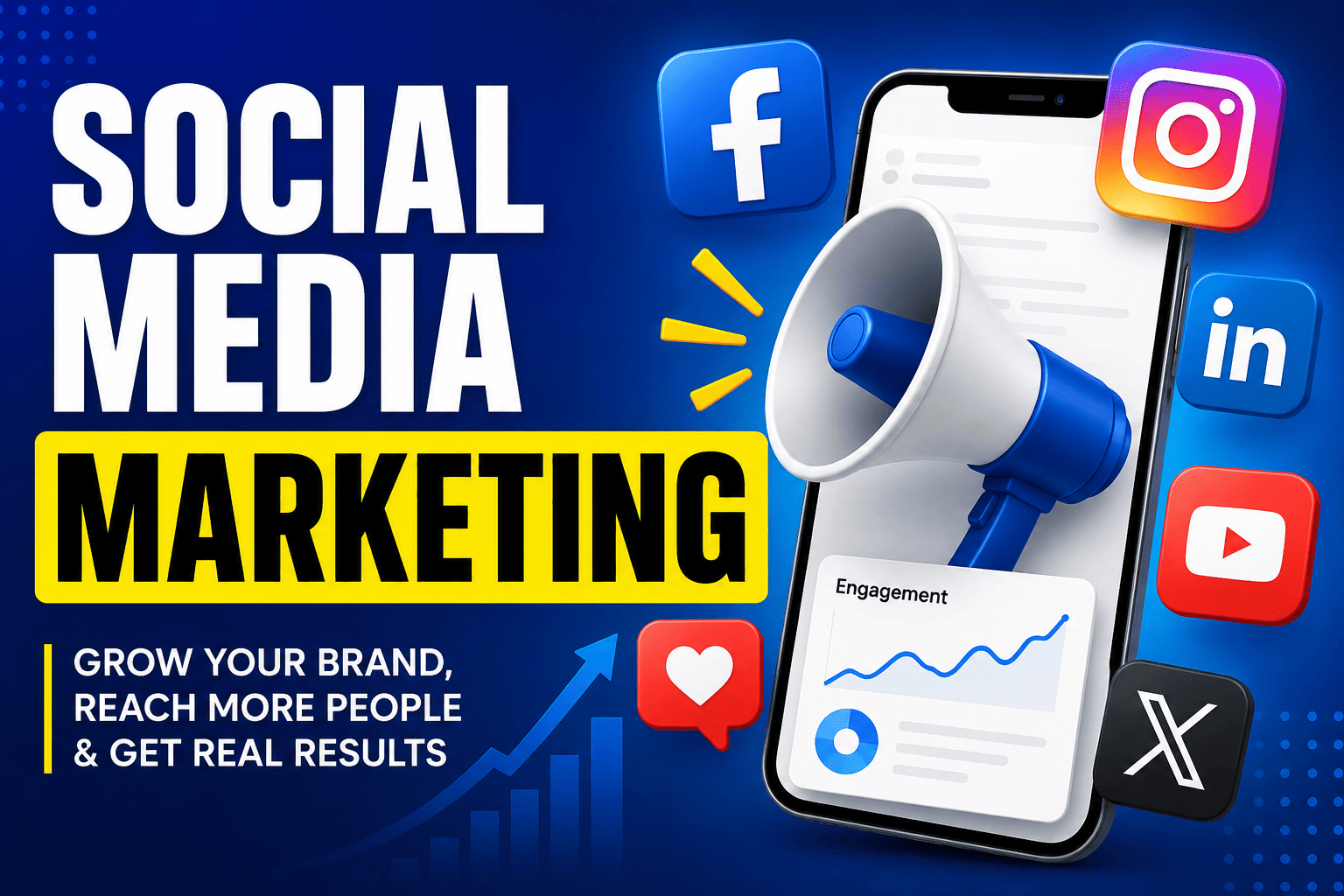
Social media marketing is the process of using platforms like Facebook, Instagram, LinkedIn, X, YouTube, and Pinterest to promote products, services, and brands.
It involves creating and sharing content such as:
- Images
- Videos
- Stories
- Reels
- Infographics
- Polls
- Live sessions
The main goals are to:
- Increase brand awareness
- Drive website traffic
- Generate leads
- Build customer relationships
- Boost sales
Why Social Media Marketing Is Important
Millions of people use social media every day to discover new products, read reviews, and interact with brands. A strong social media presence helps businesses stay visible and competitive.
Key Benefits of Social Media Marketing
- Builds Brand Awareness
Regular posting helps your business stay in front of potential customers.
- Creates Trust and Credibility
When people see positive reviews, helpful content, and active engagement, they are more likely to trust your brand.
- Drives Targeted Traffic
Social media can send highly relevant visitors to your website or landing pages.
- Generates Leads and Sales
Strategic campaigns can turn followers into paying customers.
- Offers Cost-Effective Promotion
Compared to traditional advertising, social media can deliver excellent returns even with modest budgets.
Popular Social Media Platforms for Marketing
Ideal for local businesses, communities, and paid advertising.
Best for visual content, lifestyle brands, and younger audiences.
Perfect for B2B companies and professional services.
YouTube
Excellent for tutorials, product demonstrations, and educational videos.
Useful for home décor, fashion, food, and DIY brands.
X (Twitter)
Effective for news updates, customer support, and real-time conversations.
How Social Media Marketing Works
Successful social media marketing starts with understanding your audience and delivering content they genuinely find useful.
Step 1: Define Your Goals
Examples include:
- Increasing followers
- Driving website traffic
- Collecting leads
- Improving engagement
- Growing sales
Step 2: Identify Your Audience
Understand:
- Age group
- Location
- Interests
- Challenges
- Buying behavior
Step 3: Create Valuable Content
Share content that educates, entertains, or solves problems.
Step 4: Post Consistently
Maintain a regular posting schedule to stay top of mind.
Step 5: Engage with Your Audience
Respond to comments, direct messages, and mentions.
Step 6: Analyze Performance
Track what works and adjust your strategy accordingly.
Types of Content That Perform Well
Some content formats consistently deliver strong engagement:
- Educational posts
- Short videos and reels
- Customer testimonials
- Before-and-after results
- Product demonstrations
- Behind-the-scenes content
- Polls and Q&A sessions
- Industry tips
Paid Social Media Advertising
Most platforms offer paid advertising options that allow businesses to target specific audiences based on:
- Location
- Age
- Interests
- Job title
- Online behavior
Paid ads can help businesses quickly reach more people and generate leads.
Social Media Marketing Tips for Better Results
Know Your Audience
Create content that addresses your customers’ needs and interests.
Focus on Quality
Useful, well-designed posts perform better than frequent low-value content.
Use Strong Visuals
High-quality images and videos attract more attention.
Write Clear Captions
Simple and compelling captions encourage engagement.
Include Calls to Action
Guide users to take the next step, such as visiting your website or contacting your business.
Monitor Analytics
Review performance regularly to understand what resonates.
Common Mistakes to Avoid
Businesses often make these avoidable mistakes:
- Posting without a strategy
- Ignoring comments and messages
- Overly promotional content
- Inconsistent posting
- Neglecting analytics
- Copying competitors instead of developing their own voice
Measuring Success in Social Media Marketing
Key performance indicators include:
- Reach
- Engagement rate
- Follower growth
- Website traffic
- Leads generated
- Conversion rate
- Return on investment (ROI)
These metrics help determine whether your strategy is producing meaningful business results.
Social Media Marketing for Small Businesses
Social media offers small businesses a practical way to compete with larger companies. By sharing authentic content and engaging directly with customers, local businesses can build strong communities and attract loyal buyers.
Examples include:
- Restaurants posting daily specials
- Real estate agents showcasing property tours
- Fitness coaches sharing workout tips
- Retail stores highlighting new arrivals
Future of Social Media Marketing
Social media continues to evolve, with short-form video, live streaming, and community-driven content becoming increasingly important. Businesses that adapt to changing user behavior and consistently provide value will continue to grow.
Final Thoughts
Social media marketing is more than just posting photos and videos. It is a powerful way to build relationships, establish trust, and grow your business online.
With the right strategy, consistent content, and genuine engagement, businesses can turn social media into one of their most valuable marketing channels.
If you want long-term success, focus on understanding your audience, sharing helpful content, and building a brand people remember and trust.