


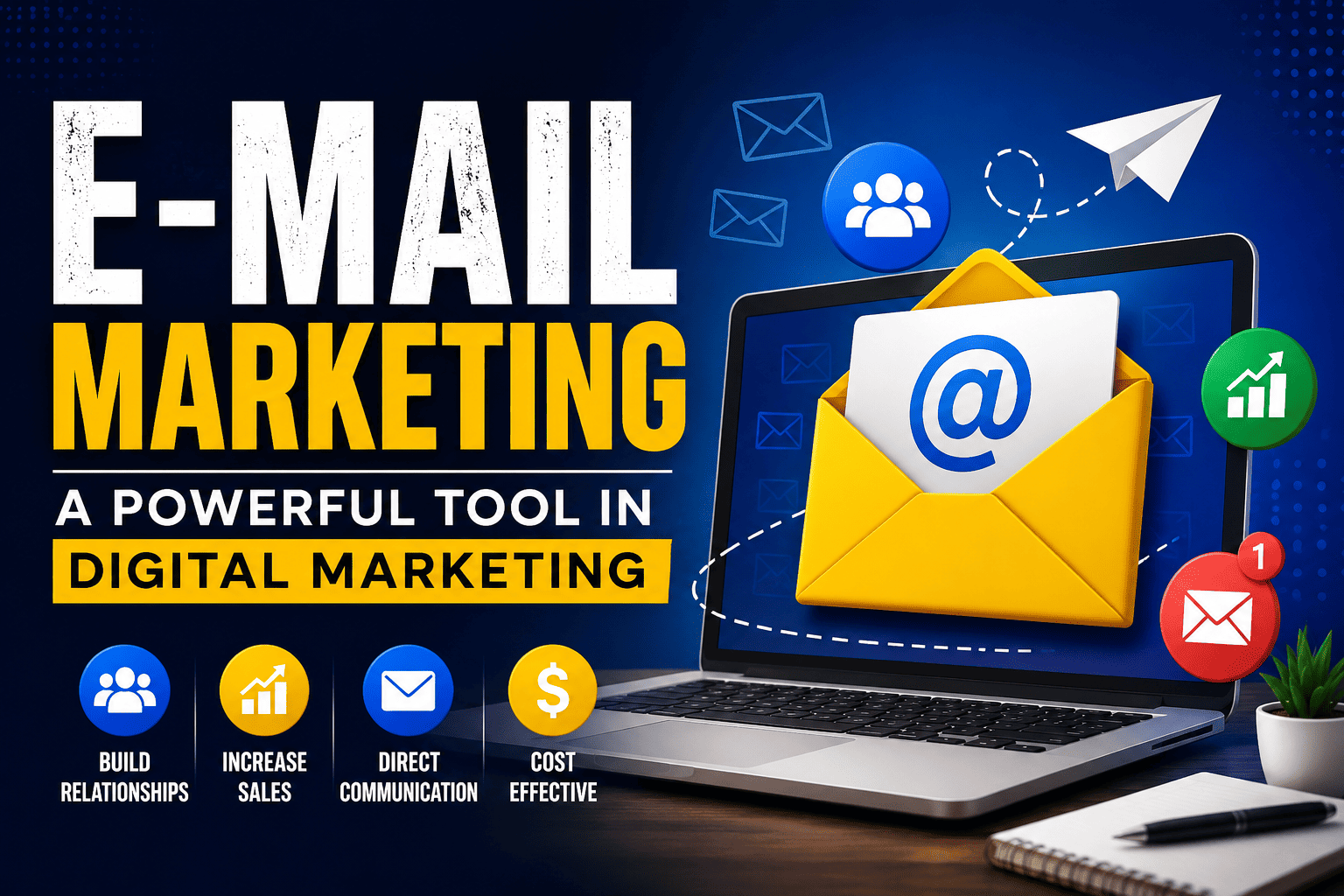
Email marketing remains one of the most effective ways for businesses to connect with their audience, generate leads, and increase sales. Whether you run a small local business, an online store, or a service-based company, email marketing gives you a direct line to your customers.
In this guide, you will learn what email marketing is, why it matters, and how to create campaigns that deliver real results.
What Is Email Marketing?
Email marketing is the process of sending targeted messages to a group of subscribers through email. These messages may include:
- Promotional offers
- Product updates
- Educational content
- Newsletters
- Event invitations
- Customer follow-ups
Unlike social media, where your content depends on changing algorithms, email allows you to reach your audience directly in their inbox.
Why Email Marketing Is Important
Email marketing continues to provide one of the highest returns on investment in digital marketing. It helps businesses:
- Build long-term relationships with customers
- Increase website traffic
- Generate qualified leads
- Boost product and service sales
- Improve customer retention
- Strengthen brand credibility
Because subscribers voluntarily join your list, they are usually more interested in your products or services than general website visitors.
Benefits of Email Marketing
Cost-Effective Marketing
Email marketing is affordable compared to traditional advertising and paid campaigns. Even small businesses can reach thousands of people with a limited budget.
Direct Communication
Your message lands directly in the subscriber’s inbox, making communication more personal and effective.
Highly Targeted Campaigns
You can segment your audience based on interests, behavior, purchase history, or location to send relevant content.
Measurable Results
Track important metrics such as:
- Open rate
- Click-through rate
- Conversion rate
- Unsubscribe rate
These insights help improve future campaigns.
Automation Saves Time
Welcome emails, abandoned cart reminders, and follow-up sequences can run automatically.
How Email Marketing Works
The email marketing process typically follows these steps:
- A visitor subscribes to your email list.
- The subscriber receives valuable content.
- You build trust over time.
- Promotional emails are sent when relevant.
- Subscribers take action by purchasing or contacting you.
Types of Email Marketing Campaigns
Welcome Emails
Sent immediately after a user subscribes. These emails introduce your business and set expectations.
Newsletter Emails
Regular updates that share blog posts, tips, and company news.
Promotional Emails
Highlight special offers, discounts, or new product launches.
Abandoned Cart Emails
Remind customers to complete purchases they left unfinished.
Re-Engagement Emails
Reconnect with subscribers who have not interacted recently.
Transactional Emails
Order confirmations, invoices, and shipping updates.
Best Practices for Successful Email Marketing
Build a Quality Email List
Focus on collecting subscribers organically through:
- Website signup forms
- Lead magnets
- Popups
- Landing pages
Never purchase email lists, as they often lead to poor engagement and spam complaints.
Write Compelling Subject Lines
A strong subject line increases open rates. Keep it clear, concise, and relevant.
Examples:
- Get 20% Off Your First Order
- Your Weekly Marketing Tips
- We Saved Your Cart
Personalize Your Emails
Use the subscriber’s name and tailor content based on their preferences.
Optimize for Mobile Devices
Most users read emails on smartphones, so use responsive templates and concise content.
Include a Clear Call to Action
Tell readers exactly what to do next, such as:
- Shop Now
- Read More
- Book a Consultation
Test and Improve
Experiment with subject lines, send times, and content formats to discover what works best.
Email Marketing Tools
Popular platforms include:
- Mailchimp
- ConvertKit
- Brevo
- ActiveCampaign
- GetResponse
These tools offer templates, automation, analytics, and audience segmentation.
Key Metrics to Track
Monitor these metrics to measure campaign performance:
- Open Rate
- Click-Through Rate (CTR)
- Conversion Rate
- Bounce Rate
- Unsubscribe Rate
- Revenue per Email
Regular analysis helps you refine your strategy.
Common Email Marketing Mistakes to Avoid
- Sending emails too frequently
- Using misleading subject lines
- Ignoring mobile optimization
- Failing to segment the audience
- Not testing campaigns
- Overloading emails with too much content
How to Grow Your Email List
Effective methods include:
- Offering free ebooks or guides
- Providing discount codes
- Hosting webinars
- Adding signup forms to blog posts
- Running contests and giveaways
The key is to offer something valuable in exchange for the subscriber’s email address.
Email Marketing and SEO
Email marketing does not directly improve search rankings, but it supports SEO by:
- Driving repeat traffic to your website
- Increasing content visibility
- Encouraging social shares
- Building stronger brand awareness
When subscribers regularly visit your site, engagement signals often improve.
Is Email Marketing Still Effective in 2026?
Absolutely. Despite the growth of social media and messaging apps, email remains one of the most trusted communication channels for businesses.
Consumers still rely on email for updates, offers, receipts, and important information. A well-planned email strategy continues to deliver strong results across industries.
Final Thoughts
Email marketing is a powerful and reliable digital marketing strategy that helps businesses build relationships, nurture leads, and increase revenue.
By creating useful content, segmenting your audience, and consistently analyzing results, you can turn your email list into one of your most valuable business assets.
Whether you are just starting out or refining an existing strategy, email marketing remains a smart investment for long-term growth.